

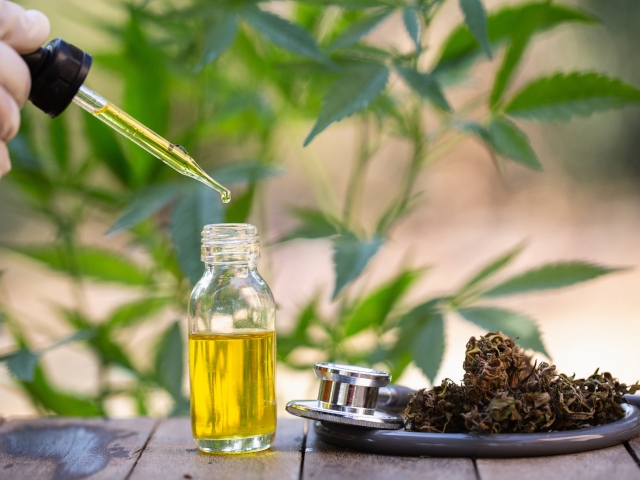
Stores selling CBD products appeared everywhere, online and on busy streets. More than 12 percent of Americans tried CBD, and about 75 percent already knew what it was. This craze spread like wildfire, with a lot of people curious about how CBD could help them. Many use it to ease stress and anxiety, which fuels the excitement. Learning how to use CBD right can surprise you because most miss some handy tips. Thinking about trying it? Getting the inside scoop gives a clear advantage. Keep reading to find out why CBD is catching on fast and how it could fit into your life just right.
Dried flowers, oils, cosmetics, drinks (alcoholic or not), sweets, infusions, liquids for vaporizers, and even products for veterinary use: this substance derived from CBD comes in many forms, and the marketing promises are going well.
From reducing anxiety to alleviating pain, fighting stress, or improving sleep quality, the virtues of CBD are numerous. But what is it really? Are these products legal? What are their proven effects?
Is CBD legal?
Discovered in 1940, CBD belongs to the family of phytocannabinoids, molecules present in CBD (CBD sativa) or cultivated hemp, especially in its flower.
More than a hundred of these molecules have been identified so far. Some of them are at the origin of the psychotropic effects of CBD: it is mainly delta-9-tetrahydrocannabinol (THC). However, despite some confusing names (“light CBD”, “legal CBD”, “wellness hemp” or “wellness CBD”), cannabidiol is a much less psychoactive substance.

As a result, “pure” CBD is legal: it is not regulated as a narcotic or psychotropic drug. However, products containing CBD are most often made up of a combination of substances, and CBD is only one molecule among others. For these complex mixtures to be legal, CBD must not be combined with more than 0.3% THC. Otherwise, the resulting product falls under the criminal drug policy (to which THC belongs).
[More than 80,000 readers trust The Conversation newsletter to better understand the world’s big issues. Subscribe today]
In addition, health authorities have reminded us in an order dated December 30, 2021, that products containing CBD cannot, under penalty of criminal sanctions, claim therapeutic claims, unless they have been authorized as a medicine.
Currently, only one drug containing purified cannabidiol is authorized in France: Epidyolex. It falls under the regulation of poisonous substances.
As CBD is considered a novel food, it and foodstuffs containing it cannot be marketed without prior evaluation and authorization by the European Food Safety Authority (EFSA). The authorization as “novel food” by EFSA has not yet been validated, pending additional data on its safety of use. Products under this regulation (vitamins or food products containing CBD) are not formally authorized in Europe, although they are available on the French market.
Given the diversity of products containing CBD, it is necessary to harmonize the regulations and conditions of access to this substance, so that users can have information or support adapted to consume them safely. These points are all the more important in a pathological context and in the search for a therapeutic effect. Currently, there is no harmonization approach in this direction to better regulate the market and accessibility to best cbd for anxiety.
How does CBD work?
While trying to understand how cannabinoids in CBD (especially THC) produce their effects, researchers have highlighted a major component of our body: the endocannabinoid system (with which THC interacts, which explains its psychotropic action).
This system includes both endogenous cannabinoid molecules (made by our body), the receptors to which they bind, and the corresponding synthesis, transport, and degradation systems.
Many major physiological mechanisms are influenced by the endocannabinoid system, such as appetite, digestive system, neural plasticity, learning, inflammation, and emotions.